
Getting someone out: $80–$180
Standard Sydney call-out for after-hours attendance. Ask before booking, not after the invoice.
A burst pipe at 2am does not wait for business hours, and neither do we. One call reaches a licensed plumber rather than an answering service, and a crew is dispatched to Rodd Point with the gear to stop the problem rather than look at it.
Most of the value in an emergency call happens before anyone arrives. Knowing to shut the water off at the meter, knowing not to touch a light switch when there is a smell of gas, knowing to kill the power to a soaked area: each of those is worth more than the hour we save on the road.
So the call starts with instructions rather than a booking form. Then a crew is dispatched with the common failure points already on the van, because diagnosing from scratch at midnight is how a two-hour job becomes a two-visit one.


Many Federation and interwar homes still run earthenware pipework that cracks and crumbles with age, letting roots and debris choke the line.
A drainage system laid a century ago was built for a household that used a fraction of the water yours does. Add a second bathroom, a dishwasher and a washing machine, and lines that coped for decades start showing where they are weakest.
That is not an argument for replacing everything. It is an argument for knowing which sections are actually tired, so the money goes into those rather than into the whole run on the assumption that old means finished.
Rodd Point’s leafy streets and mature gardens along the Bay Run send roots hunting into old pipe joints, a top cause of recurring blockages here.
Heavy rain arriving on a high tide is the combination that fills yards near the water. Stormwater that normally drains away has nothing to drain into, so it backs up through the pits instead — which is why a blocked line around here shows itself in the garden long before it shows itself indoors.
If your yard has filled more than once, the pit is telling you something. Clearing it during the storm is emergency work; finding out why it filled is a twenty-minute camera run on a dry day, and considerably cheaper.
Clay drainage is laid in short lengths, so a single run has a great many joints, and after decades each one has opened a fraction. The line copes fine at normal flow and stops coping the moment demand spikes, which is why so many of these calls come on a weekend morning or after a full house has been showering.
Clearing restores flow the same night. Whether it holds depends on what the camera finds, and that is worth doing before the next long weekend rather than after it.
Most homes around Rodd Point have an overflow gully outside — a low grate, often near the back step, that nobody thinks about until it matters. It is deliberately set below the lowest fixture indoors so that when the line blocks, it spills into the garden instead of through your floor.
Sitting right on Iron Cove, Rodd Point’s low blocks cop heavy-rain runoff that overwhelms stormwater pits and backs up fast.
So a gully running in heavy rain is not a fault. It is the system doing its job and telling you the line downstream of it has stopped taking water. That is the moment to call, not after it reaches the hallway.
Root intrusion almost never causes a sudden emergency. It causes a slow narrowing, and then one ordinary Tuesday the last few millimetres close and everything backs up at once. That is why the call feels sudden when the cause is not.
Clearing it tonight is the right move and it is not the end of the story. Ask for the camera run afterwards, because the interval before the next one is set by how open the joint is, not by anything the household did.
Two separate systems run under most properties around Rodd Point: stormwater, which takes rain from roofs and yards, and sewer, which takes everything from inside the house. They are not supposed to meet.
Being so close to the Bay, high water tables and tidal movement stress older sewer and stormwater runs near the shoreline.
When they do — an illegal connection, a cracked line, a surcharging pit finding its way into the wrong pipe — heavy rain overwhelms a system never built for it, and the symptoms appear indoors. Working out which system has actually failed is the first thing we do, because the repair, the cost and who is responsible all follow from it.
It means a plumber answers, not a message service that logs your details for the morning. Nights, weekends and public holidays included.
It does not mean instant. Crews are finite and the worst nights are genuinely busy, so what you get is a real arrival window and a call if it moves — plus the advice to hold the situation steady in the meantime. We would rather tell you ninety minutes and mean it than say thirty and not.
Standard Sydney call-out for after-hours attendance. Ask before booking, not after the invoice.
Roughly $120–$160 in daylight. Someone is out of bed and on the road, and the rate reflects it.
Where most single-fault after-hours jobs land once attendance, labour and small parts are counted.
Slab leaks, gas line work, anything that means opening a wall overnight. You approve the figure first.
We would rather book you for Monday at daylight rates than take a premium for a job that was never urgent.
The price is agreed before work starts, including at 2am. Figures here are indicative of the 2026 Sydney market rather than a quote from us, you get your own number as a fixed price before any work starts.

Not a call centre. You describe what is happening, we tell you what to shut off right now, and whether this genuinely needs someone tonight. Sometimes it does not, and we say so.
The nearest available crew heads for Rodd Point with the common failure points already stocked on the van: pipe, fittings, valves, drain gear.
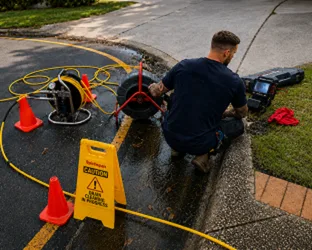
First job on site is stopping the damage: isolate, contain, make safe. Then you get a fixed price for the proper repair before it starts.

Most emergencies are permanently repaired on the spot. If a part has to wait for a supplier, you are left safe, watertight and functioning in the meantime.
Describe what it is doing and we will tell you honestly whether it needs a van now or costs less on Monday.
Cost, response times, and what actually counts as an emergency.
Ring us and a plumber picks up. Leave details instead and you will get a callback with an ETA, not a sales call.

Leave your details and our local Rodd Point team will call you back fast.